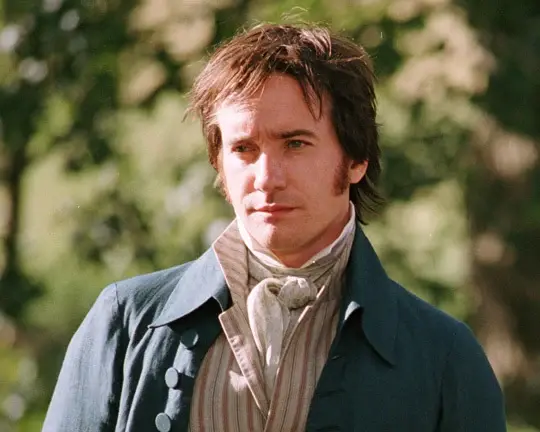
Background

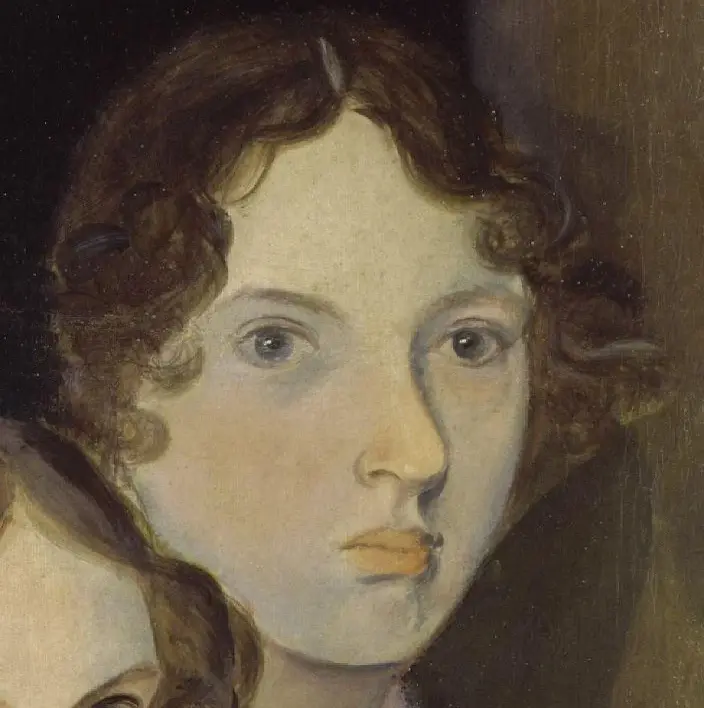
Painting of Emily Bronte
Painting of Emily Brontë

Wuthering Heights is an 1847 novel by Emily Brontë, initially published under her pen name Ellis Bell. It concerns two families of the landed gentry living on the West Yorkshire moors, the Earnshaws and the Lintons, and their turbulent relationships with the Earnshaws' foster son, Heathcliff. The novel was influenced by Romanticism and Gothic fiction.

Wuthering Heights is now widely considered to be one of the greatest novels ever written in English, but contemporaneous reviews were polarized. It was controversial for its depictions of mental and physical cruelty, including domestic abuse, and for its challenges to Victorian morality and religious and societal values.

Wuthering Heights was accepted by publisher Thomas Newby along with Anne Brontë's Agnes Grey before the success of their sister Charlotte 's novel Jane Eyre, but they were published later. After Emily's death, Charlotte edited a second edition of Wuthering Heights, which was published in 1850. It has inspired an array of adaptations acr oss several media, including English singer-songwriter Kate Bush's song of the same name.
Plot

Opening

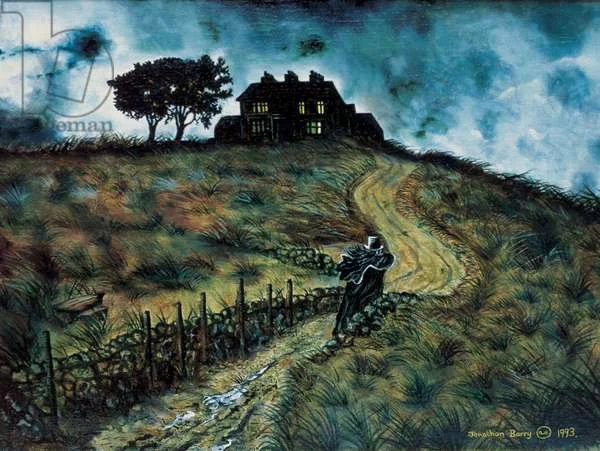
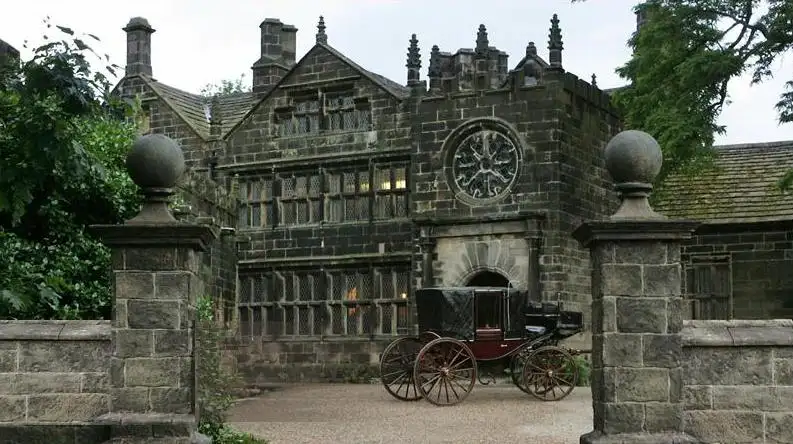
Picture of an old mansion in Yorkshire

In 1801, Mr. Lockwood, the new tenant at Thrushcross Grange in Yorkshire, pays a visit to his landlord, Heathcliff, at his remote moorland farmhouse, Wuthering Heights. There he meets a reserved young woman (later identified as Cathy Linton), Joseph, a cantankerous servant, and Hareton, an uneducated fellow, who presents himself as such. Everyone is sullen and inhospitable. Snowed in for the night, Lockwood reads the diary of the former inhabitant of his room, Catherine Earnshaw, and has a nightmare in which a ghostly Catherine begs to enter through the window. Awakened by Lockwood's fearful yells, Heathcliff is troubled.

Lockwood later returns to Thrushcross Grange in heavy snow, falls ill from the cold and becomes bedridden. While he recovers, Lockwood's housekeeper Ellen "Nelly" Dean tells him the story of the strange family.

Nelly's Tale

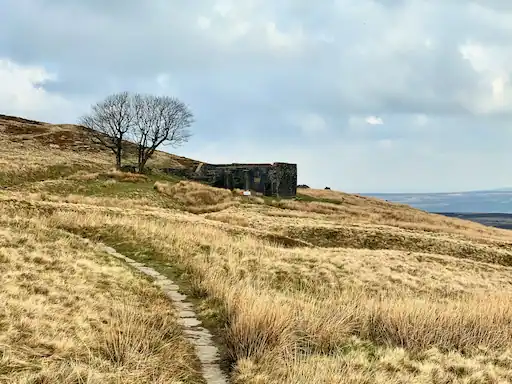
Picture of the ruins of Top Withens
The climb to ruined farmhouse Top Withens, thought to have inspired the Earnshaws' home in Wuthering Heights

Thirty years earlier, the Earnshaws live at Wuthering Heights with their children, Hindley and Catherine, and a servant—Nelly herself. Returning from a trip to Liverpool, Earnshaw brings home a young orphan whom he names Heathcliff; Earnshaw treats the boy as his favourite. His own children he neglects, especially after his wife dies. Hindley beats Heathcliff, who gradually becomes close friends with Catherine.

Hindley departs for university, returning as the new master of Wuthering Heights on the death of his father three years later. He and his new wife Frances allow Heathcliff to stay, but only as a servant.

Heathcliff and Catherine spy on Edgar Linton and his sister Isabella, children who live nearby at Thrushcross Grange. Catherine is attacked by their dog, and the Lintons take her in, sending Heathcliff home. When the Lintons visit, Hindley and Edgar make fun of Heathcliff; a fight ensues. Heathcliff is locked in the attic and vows revenge.

Frances dies after giving birth to a son, Hareton. Two years later, Catherine becomes engaged to Edgar. She confesses to Nelly that she loves Heathcliff, and will try to help but cannot marry him because of his low social status. Nelly warns her against the plan. Heathcliff overhears part of the conversation and, misunderstanding Catherine's heart, flees the household. Catherine falls ill, distraught.

Illustration of Heathcliff returning to Wuthering Heights

Three years after his departure, with Edgar and Catherine having married in the meantime, Heathcliff unexpectedly returns, now a wealthy gentleman. He encourages Isabella's infatuation with him as a means of revenge on Catherine. Enraged by Heathcliff's constant presence at Thrushcross Grange, Edgar cuts off contact. Catherine responds by locking herself in her room and refusing food; pregnant with Edgar's child, she never fully recovers. At Wuthering Heights, Heathcliff gambles with Hindley, who mortgages the property to him to pay his debts. Heathcliff elopes with Isabella, but the relationship fails and they soon return.

When Heathcliff discovers that Catherine is dying, he visits her in secret. She dies shortly after giving birth to a daughter, Cathy, and Heathcliff rages, calling on her ghost to haunt him for as long as he lives. Isabella flees south where she gives birth to Heathcliff's son, Linton. Hindley dies six months later, leaving Heathcliff as master of Wuthering Heights.

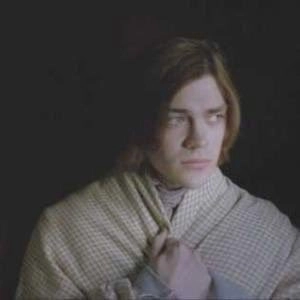
Photo of movie Linton Heathcliff

Twelve years later, after Isabella's death, the still-sickly Linton is brought back to live with his uncle Edgar at the Grange, but Heathcliff insists that his son must instead live with him. Cathy and Linton (respectively at the Grange and Wuthering Heights) gradually develop a relationship. Heathcliff schemes to ensure that they marry, and on Edgar's death demands that the couple move in with him. He becomes increasingly wild and reveals that on the night Catherine died he dug up her grave, and ever since has been plagued by her ghost. When Linton dies, Cathy has no option but to remain at Wuthering Heights.

Having reached the present day, Nelly's tale concludes.

Ending

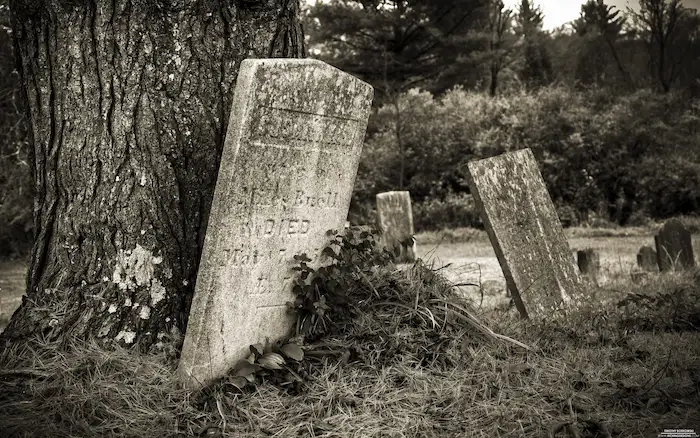
Photo of gravestones

Lockwood grows tired of the moors and moves away. Eight months later he arrives at Wuthering Heights while travelling through the area. He sees Nelly again, who is now the housekeeper at Wuthering Heights. She reports that Cathy has been teaching the still-uneducated Hareton to read. Heathcliff was seeing visions of the dead Catherine; he avoided the young people, saying that he could not bear to see Catherine's eyes, which they both shared, looking at him. He had stopped eating, and some days later was found dead in Catherine's old room.

In the present, Lockwood learns that Cathy and Hareton plan to marry and move to the Grange. Joseph is left to take care of the declining Wuthering Heights. Nelly says that the locals have seen the ghosts of Catherine and Heathcliff wandering abroad together. Lockwood passes by the graves of Catherine, Edgar, and Heathcliff, and is convinced they are finally at peace.

Characters

Heathcliff

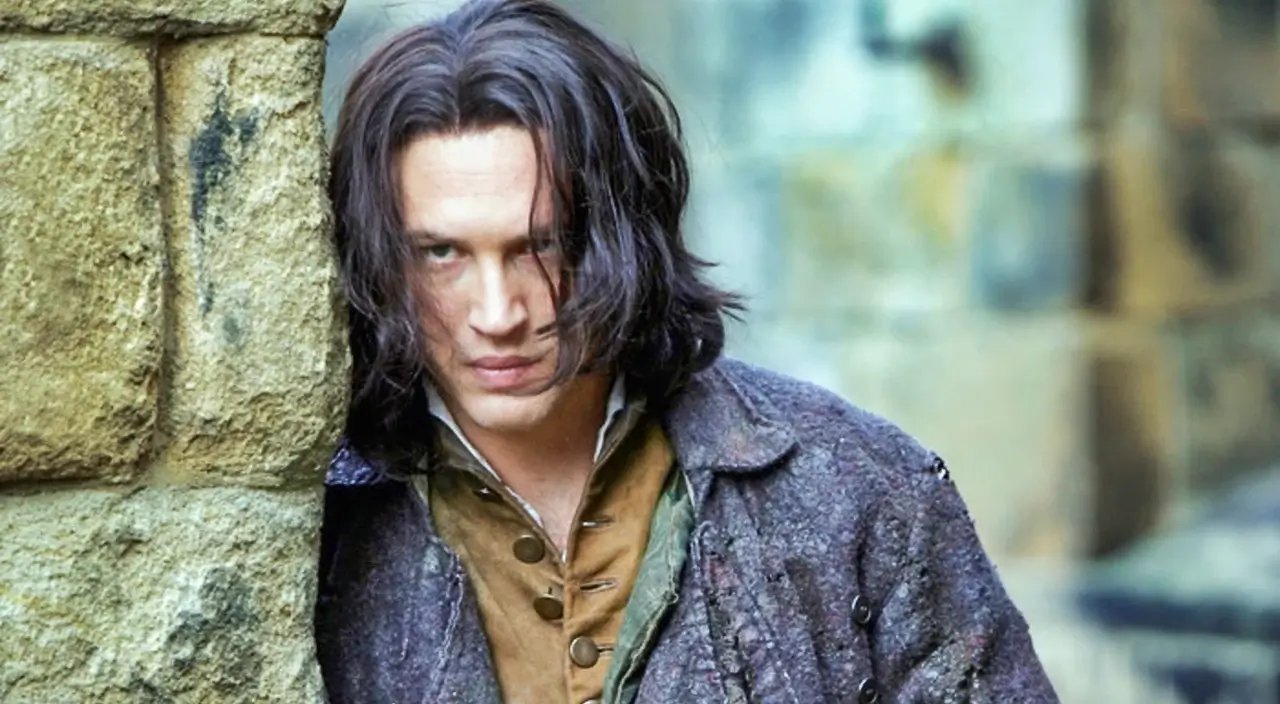
Photo of movie Heathcliff

Heathcliff is a foundling from Liverpool, who is taken by Mr. Earnshaw to Wuthering Heights, where he is reluctantly cared for by the family and spoiled by his adopted father. He and Mr. Earnshaw's daughter, Catherine, grow close, and their love is the central theme of the first volume. His revenge against the man she chooses to marry and its consequences are the central theme of the second volume. Heathcliff has been considered a Byronic hero, but critics have pointed out that he reinvents himself at various points, making his character hard to fit into any single type. He has an ambiguous position in society, and his lack of status is underlined by the fact that "Heathcliff" is both his given name and his surname.

The character of Heathcliff may have been inspired by Branwell Brontë. An alcoholic and an opium addict, he would have indeed terrorised Emily and her sister Charlotte during frequent crises of delirium tremens that affected him a few years before his death. Even though Heathcliff has no alcohol or drug problems, the influence of Branwell's character is likely; although the same could be said, perhaps more appropriately, of Hindley Earnshaw and Linton Heathcliff.

Catherine Earnshaw

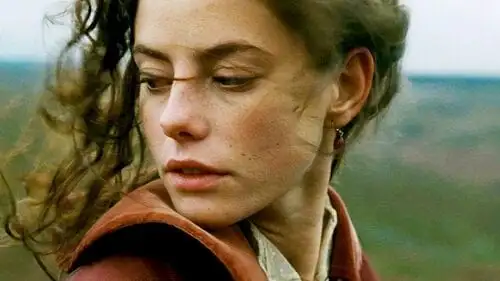
Photo of movie Catherine Earnshaw

First introduced to the reader after her death, through Lockwood's discovery of her diary and carvings. The description of her life is confined almost entirely to the first volume. She seems unsure whether she is, or wants to become, more like Heathcliff, or aspires to be more like Edgar. Some critics have argued that her decision to marry Edgar Linton is allegorically a rejection of nature and a surrender to culture, a choice with unfortunate, fateful consequences for all the other characters. She dies hours after giving birth to her daughter.

Edgar Linton

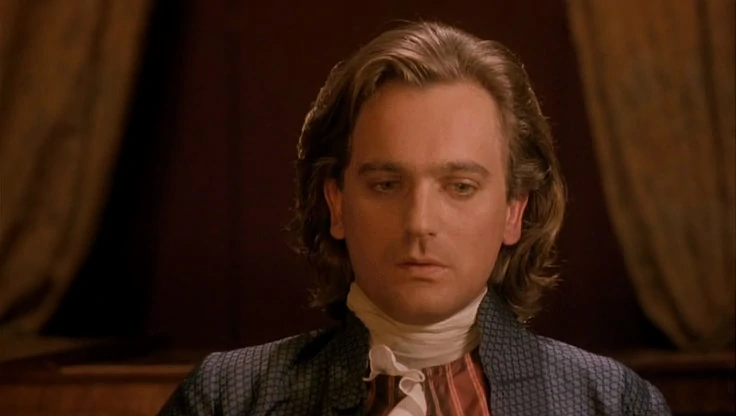
Photo of movie Edgar Linton

Introduced as a child in the Linton family, he resides at Thrushcross Grange. Edgar's style and manners are in sharp contrast to those of Heathcliff, who instantly dislikes him, and of Catherine, who is drawn to him. Catherine marries him instead of Heathcliff because of his higher social status, with disastrous results to all characters in the story. He dotes on his wife and later his daughter.

Ellen (Nelly) Dean

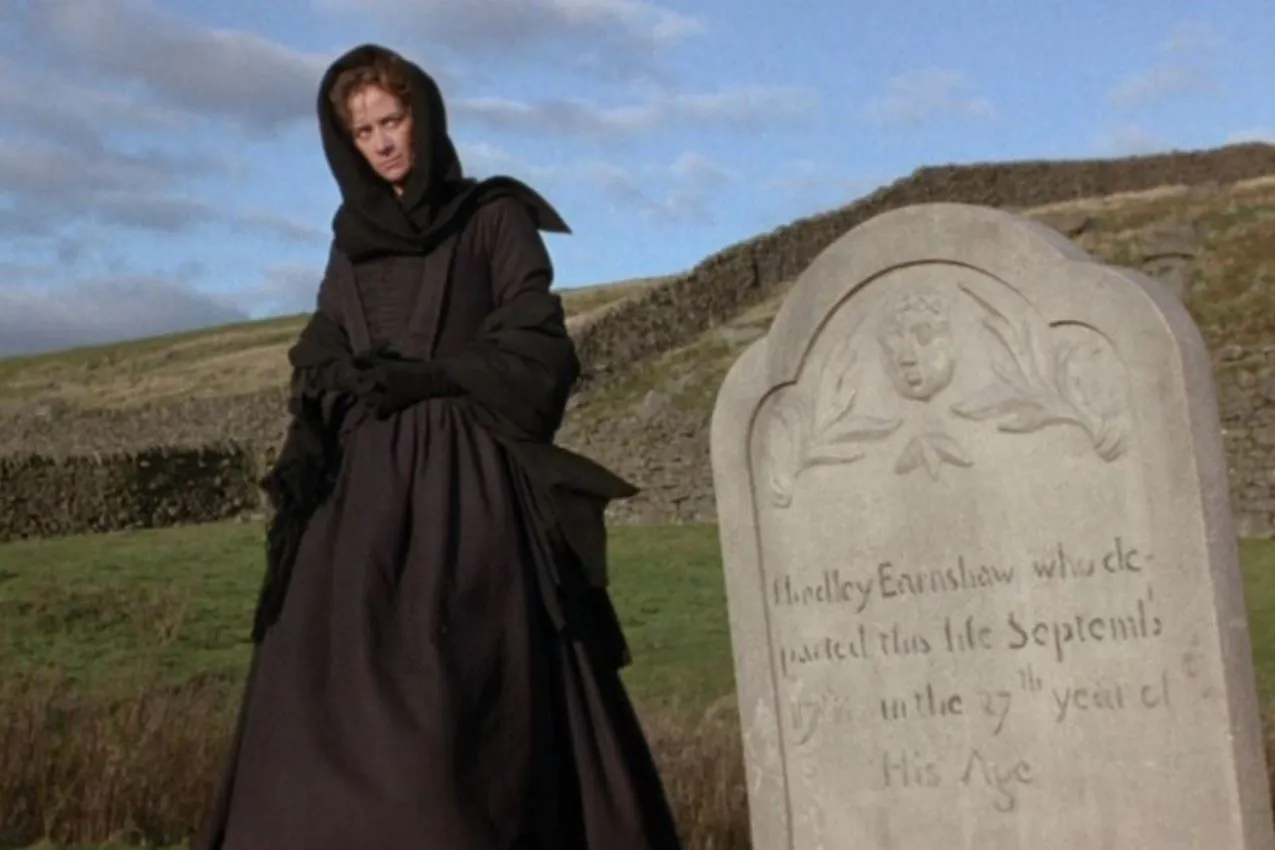
Photo of old Nelly next to tombstone

The main narrator of the novel, Nelly is a servant to three generations of the Earnshaws and two of the Linton family. Humbly born, she regards herself nevertheless as Hindley's foster-sister (they are the same age and her mother is his nurse). She lives and works among the rough inhabitants of Wuthering Heights but is well-read, and she also experiences the more genteel manners of Thrushcross Grange. She is referred to as Ellen, her given name, to show respect, and as Nelly among those close to her. Critics have discussed how far her actions as an apparent bystander affect the other characters and how much her narrative can be relied on.

Isabella Linton

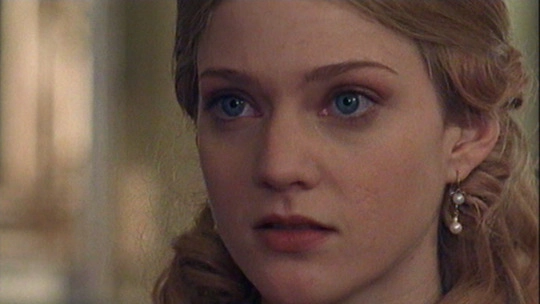
Photo of movie Isabella Linton

Edgar's sister. She views Heathcliff romantically, despite Catherine's warnings, and becomes an unwitting participant in his plot for revenge against Edgar. Heathcliff marries her but treats her abusively. While pregnant, she escapes to London and gives birth to a son, Linton. She entrusts her son to her brother Edgar when she dies.

Hareton Earnshaw

Photo of movie Hareton Earnshaw

The son of Hindley and Frances, raised at first by Nelly but soon by Heathcliff. Joseph works to instill a sense of pride in the Earnshaw heritage (even though Hareton will not inherit Earnshaw property, because Hindley has mortgaged it to Heathcliff). Heathcliff, in contrast, teaches him vulgarities as a way of avenging himself on Hindley. Hareton speaks with an accent similar to Joseph's, and occupies a position similar to that of a servant at Wuthering Heights, unaware that he has been done out of his inheritance. He can only read his name. In appearance, he reminds Heathcliff of his aunt, Catherine.

Publication History

1847 edition

The original text as published by Thomas Cautley Newby in 1847 is available online in two parts. The novel was first published together with Anne Brontë's Agnes Grey in a three-volume format: Wuthering Heights filled the first two volumes and Agnes Grey made up the third.

1850 edition

In 1850 Charlotte Brontë edited the original text for the second edition of Wuthering Heights and also provided it with her foreword. She addressed the faulty punctuation and orthography but also diluted Joseph's thick Yorkshire dialect. Writing to her publisher, W. S. Williams, she said that:

“It seems to me advisable to modify the orthography of the old servant Joseph's speeches; for though, as it stands, it exactly renders the Yorkshire dialect to a Yorkshire ear, yet I am sure Southerns must find it unintelligible; and thus, one of the most graphic characters in the book is lost on them.”